XSD Wheel Sand Washer Working Principle and Performance Advantages for Aggregate Washing
24 02,2026
Technical knowledge
This article explains how the XSD wheel sand washer addresses common pain points in aggregate washing—low throughput, high impurity carryover, and rapid wear. Built on proven international concepts and optimized for local operating conditions, the XSD uses impeller-driven agitation and friction cleaning to separate clay, silt, and lightweight contaminants while preserving finished sand grading. A sealed oil-bath transmission and high-integrity sealing structure protect bearings from water and abrasive slurry, helping extend service life and significantly reduce unplanned downtime. In typical production lines, the XSD integrates with a sand-making machine to deliver washing, dewatering, and grading in one continuous process, supporting stable product quality for materials such as granite, basalt, river pebbles, and limestone. Field applications commonly report processing capacities of 20–180 t/h (model-dependent), lower fault incidence under equivalent duty cycles, and cleaner final sand with reduced mud content—translating into lower maintenance costs and higher customer satisfaction in decision-stage equipment selection.

How the XSD Wheel Sand Washer Works—and Why It Performs Better in Real Aggregates Production
In sand & aggregate operations, washing is often treated as a “support step,” but it directly determines finished sand quality, plant stability, and buyer satisfaction. The common pain points are well known: low washing efficiency, clay and silt residues, rapid bearing wear, frequent downtime, and inconsistent gradation. The XSD sand washer (wheel-type / bucket wheel) was engineered to address these problems with a design that combines proven international concepts with practical localization for demanding quarry and riverbed materials.
This article explains the XSD sand washer working principle (impeller friction cleaning + dewatering + grading), and highlights how sealed oil-bath transmission and high-seal structures reduce failure rates and maintenance cost—without sacrificing throughput.
Why Sand Washing Becomes a Bottleneck (and a Cost Trap)
Even with a strong crushing and screening line, the washing section can quietly limit output. When mud content rises or the feed has flaky fines, many plants see a chain reaction: washed sand fails cleanliness specs, water consumption climbs, and wear parts fail earlier than planned. In practical terms, buyers complain about mortar performance, concrete strength variance, and filtration issues in asphalt mixing.
Typical operational symptoms
- Residual silt/clay causes poor sand cleanliness and unstable gradation
- Wet sand increases belt load and impacts downstream screening
- Bearings fail early due to water ingress and abrasive slurry
- Frequent shutdowns for cleaning, greasing, and seal replacement
What decision-stage buyers usually ask
- Can it keep mud content consistently under 1–2% for construction sand?
- What is the real capacity range and how does it change with moisture?
- How well does it protect bearings and reduce unplanned downtime?
- How does it integrate with a VSI sand making machine and hydrocyclone system?

XSD Sand Washer Technology Background: International Concept, Localized for Tough Feed
The XSD series is built around a mature wheel-type washing mechanism widely adopted in global quarrying. The key improvement lies in adapting the structure to higher abrasion conditions and variable feed quality—common in granite and basalt quarries, river pebble sites, and mixed recycled aggregates. Instead of relying solely on high water volume, the machine emphasizes mechanical friction washing + controlled overflow separation, which is often more stable under fluctuating mud content.
In modern production lines, it is also designed to connect smoothly with VSI sand making machines (manufactured sand) and screening units, delivering a cleaner final product while significantly lowering maintenance cost compared with poorly sealed alternatives.
Applicable Materials: Wide Adaptability Without “Over-Tuning”
XSD wheel sand washers are commonly selected for operations that handle multiple rock types across seasons. Typical materials include:
Material Compatibility Snapshot
| Material |
Common issues before washing |
Expected outcome after XSD washing* |
| Granite |
Stone powder + adhesive fines |
Cleaner sand surface, reduced sludge carryover |
| Basalt |
High abrasion slurry, seal wear |
Improved stability with sealing + oil-bath drive |
| River pebble / cobble |
Clay film, organic residue |
Enhanced friction scrubbing, better cleanliness |
| Manufactured sand (VSI) |
Excess stone powder, gradation fluctuation |
Controlled overflow removes fines for consistent quality |
*Outcomes vary by feed mud content, water quality, and process configuration; figures should be validated via site test.
XSD Sand Washer Working Principle: Friction Cleaning + Overflow Separation + Dewatering
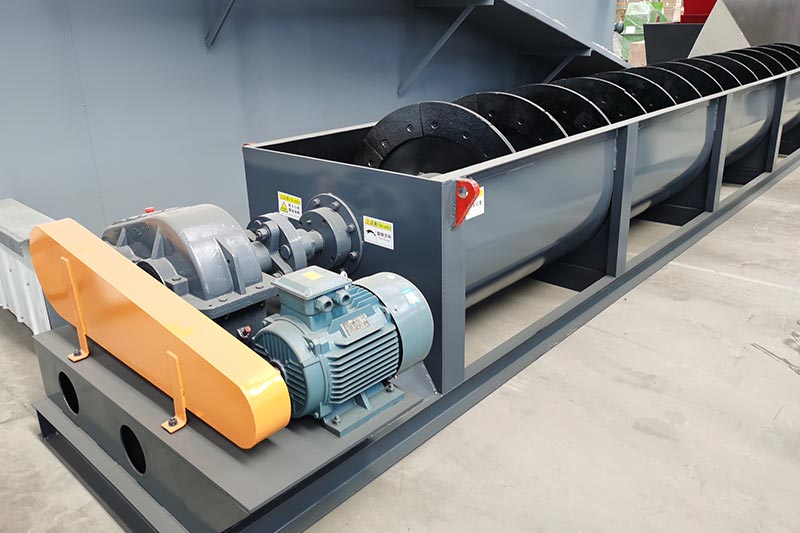
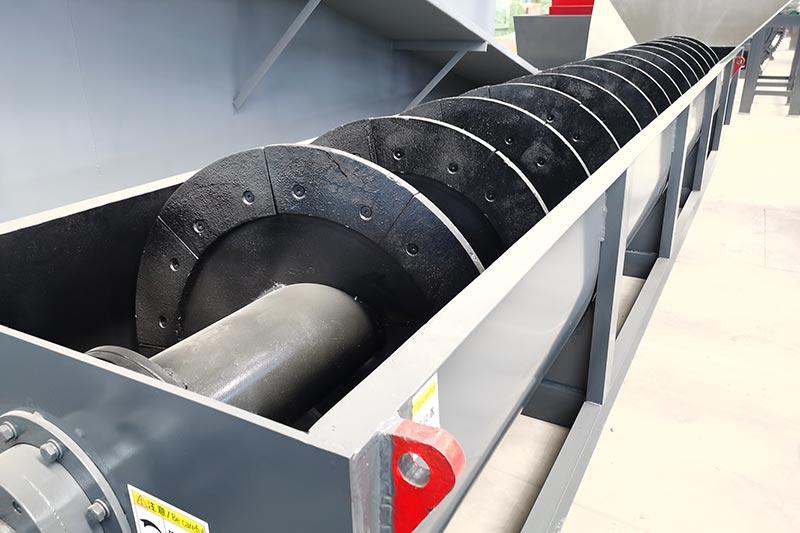
The core principle of a wheel-type sand washer is simple but effective: sand is lifted by rotating buckets, scrubbed by mutual friction and water flow, and then dewatered as it exits. The XSD design improves this cycle with a stable transmission and robust sealing, allowing higher uptime in abrasive conditions.
Process flow (suggested infographic: “3-step loop”)
1) Feeding & soaking
Sand enters the washing槽, water forms a slurry environment that loosens clay and silt.
2) Wheel lifting & friction scrubbing
Buckets lift sand; particles rub against each other and the water stream removes adhered impurities.
3) Dewatering & overflow grading
As sand rises, free water drains; fines and mud overflow to the settling section for separation.
Because the cleaning relies on repeated lifting and friction rather than only water volume, plants typically see more consistent cleanliness when feed conditions fluctuate.
Three Practical Advantages: Lower Failure Rate, Higher Throughput, Cleaner Sand
1) Low failure rate through sealing + oil-bath transmission
In sand washing, the most expensive “invisible loss” is not power—it is downtime caused by bearing damage. XSD designs commonly use a sealed structure combined with an oil-bath transmission concept to isolate key rotating components from water and abrasive slurry. In many continuous-duty plants, this translates into fewer seal-related failures and longer service intervals.
Reference field data (typical): well-configured wheel sand washer lines often report 20–35% fewer unplanned stoppages related to drive/bearing issues compared with basic open-drive washing units, especially under high-silt seasons.
2) Large processing capacity with stable discharge moisture
For decision-stage buyers, “capacity” must be interpreted as stable, saleable output. XSD series units in mainstream configurations typically cover 20–180 t/h depending on wheel diameter, tank volume, and feed gradation. In many construction sand applications, discharge moisture after wheel dewatering is commonly around 10–15% (site-dependent), helping reduce stockpile segregation and improving downstream handling efficiency.
The operational benefit is straightforward: less rework and fewer customer complaints caused by “dirty sand” batches, which improves repeat orders and long-term client confidence.
3) Higher cleanliness via controlled overflow separation
Cleanliness is not only about “washing harder.” It is about separating fines efficiently without losing good sand. In XSD operation, the overflow weir height and water flow can be tuned to remove silt/clay while retaining target sand fraction. With proper water management, many plants reach a final mud content of ≤ 1.0–2.0% for common construction sand specifications (depending on local standards and testing method).
This is especially valuable for manufactured sand from VSI crushers, where excess stone powder can hurt concrete workability if not controlled.
How XSD Works with a Sand Making Machine: Washing, Dewatering, and Grading in One Section
In a standard manufactured sand line, a VSI sand maker produces well-shaped particles but also generates fine powder. If these fines are not managed, they increase water demand in concrete and reduce product consistency. In practice, XSD is often placed after screening to treat the 0–5 mm fraction, providing:
Washing (surface impurity removal)
Friction scrubbing removes adhered clay films and organic residues, improving particle surface cleanliness and mortar bonding performance.
Dewatering (handling efficiency improvement)
Wheel lifting naturally drains free water, reducing transport and stockpiling issues and supporting steadier downstream conveying.
Grading (overflow control to remove fines)
Fine particles and mud are discharged via overflow, which can be paired with settling ponds or recovery units to optimize water reuse.
Operational note: When configured with a hydrocyclone (optional), many plants can push powder control further while reducing freshwater usage—an approach increasingly favored in regions with strict water management requirements.
Real-World Performance: What Buyers Can Benchmark
For procurement teams, the best evaluation method is to benchmark measurable indicators before and after installation. While exact results depend on feed properties and process layout, the following targets are commonly used for acceptance and continuous improvement:
Suggested KPI Table (for site trial & commissioning)
| Processing capacity |
Typical single-unit range: 20–180 t/h (model-dependent) |
| Finished sand mud content |
Common target: ≤ 1.0–2.0% with proper water/overflow settings |
| Unplanned downtime |
Often reduced by ~20–35% vs. basic open-drive washers (site-dependent) |
| Wear/maintenance interval |
Many plants extend service intervals by ~15–30% when sealing is maintained |
| Water reuse potential |
Higher with settling + recovery; freshwater demand can drop ~10–25% in optimized loops |
Infographic suggestion (decision-friendly)
- Before vs. After comparison chart: mud content, downtime hours/month, maintenance cost index
- Process flow diagram: VSI → screen → XSD → stockpile, with overflow to settling/recovery
- Seal & bearing protection cutaway: highlight oil-bath transmission and high-seal zones
Why This Matters Commercially: Cleaner Sand, Fewer Stops, Stronger Customer Retention
For aggregate producers, the real ROI of an XSD wheel sand washer is rarely a single metric. It is the combined effect of cleaner finished sand, steadier delivery schedules, and fewer “emergency repairs” that consume labor and parts. When a plant consistently meets cleanliness requirements and reduces batch-to-batch variability, it often sees fewer disputes, stronger repeat orders, and higher confidence from concrete and asphalt customers.
In other words, the machine is not only a washing device—it is a reliability tool that can raise overall line efficiency and significantly lower maintenance costs under continuous production.
Ready to Upgrade Sand Cleanliness and Uptime?
Share your raw material type, target capacity, and required mud content. A correctly sized XSD configuration and water/overflow setup can make the difference between “washed sand” and saleable, spec-compliant sand.
Get a Custom XSD Sand Washer Solution (Capacity & Process Layout)
Typical response includes: model recommendation, reference capacity range, wear & sealing considerations, and integration notes for VSI/screening lines.





.jpg?x-oss-process=image/resize,m_fill,h_600,w_600/format,webp)
.jpg?x-oss-process=image/resize,m_fill,h_600,w_600/format,webp)






 Facebook