
In modern aggregate production, “good sand” is not just about output volume—it’s about consistent gradation, controllable fines, and predictable performance in asphalt and concrete. A digitally manufactured VSI sand making machine (vertical shaft impact crusher) can directly influence particle uniformity by improving the precision and repeatability of critical components. Many plants report measurable gains after upgrading to high-precision production lines: up to 30% higher stable throughput, 10–18% lower recirculation load, and a noticeably tighter particle size distribution under the same raw material conditions.
Key takeaway: When a VSI crusher is manufactured with CNC-driven digital processes, the crushing chamber geometry and rotor balance become more consistent—so the material receives more uniform impact energy and angle, improving sand shape and gradation.
Operators often focus on feed rate, rotor speed, cascade ratio, and screen selection. Those parameters matter—but they cannot fully compensate for mechanical inconsistencies. In a VSI sand making machine, small deviations in rotor concentricity, chamber symmetry, and wear part fit may lead to non-uniform material acceleration. The result is a wider spread of particle sizes and a higher chance of over-crushing or excessive fines.
Digital manufacturing addresses this at the root: by controlling the accuracy of steel cutting, welding, machining, assembly, and surface treatment, it reduces deviation accumulation across the full process chain. When key parts repeat within tighter tolerances, the VSI crusher runs more steadily—material trajectories become more consistent, and the final sand shows a cleaner, more predictable grading curve.
What “uniformity” looks like in practice: Many road and concrete specs prefer a controlled 0–4.75 mm sand fraction with balanced sub-fractions (e.g., 0–0.6 / 0.6–1.18 / 1.18–2.36 / 2.36–4.75 mm). Better manufacturing consistency helps keep these bands stable over longer runs, reducing manual re-tuning.

A VSI sand making machine works by accelerating material and throwing it against an anvil ring or material bed. The stability of that “throw” is everything. Digital manufacturing—often built around dozens of CNC production lines—improves repeatability across the components that shape impact energy distribution.
If the rotor assembly has micro-imbalance or inconsistent fit, vibration increases, and the material exit velocity distribution widens. With CNC machining and digital inspection, manufacturers can keep rotor-related deviations low, which typically leads to: 3–8% lower vibration amplitude in steady operation and longer bearing life in many field conditions—both of which support uniform crushing.
The chamber is not just a shell; it is a geometric “guidance system” for particle movement. When steel plate cutting, bending, and welding are digitally controlled, the chamber symmetry improves. That means: the material experiences a more consistent impact angle, reducing random over-crushing and helping maintain a tighter gradation.
Even the best settings drift if wear parts do not seat consistently. Digital machining improves contact surfaces and assembly repeatability, which helps the machine hold its performance longer between maintenance intervals. Plants commonly see 5–12% improvement in “spec sand” stability across long shifts because the crushing gap behavior changes more slowly and predictably.
Digitally controlled blasting and painting (or coating) matter more than they seem. Better corrosion protection and surface consistency support mechanical reliability—especially for coastal or high-humidity regions—reducing unplanned stops that disrupt grading stability and increase waste piles.
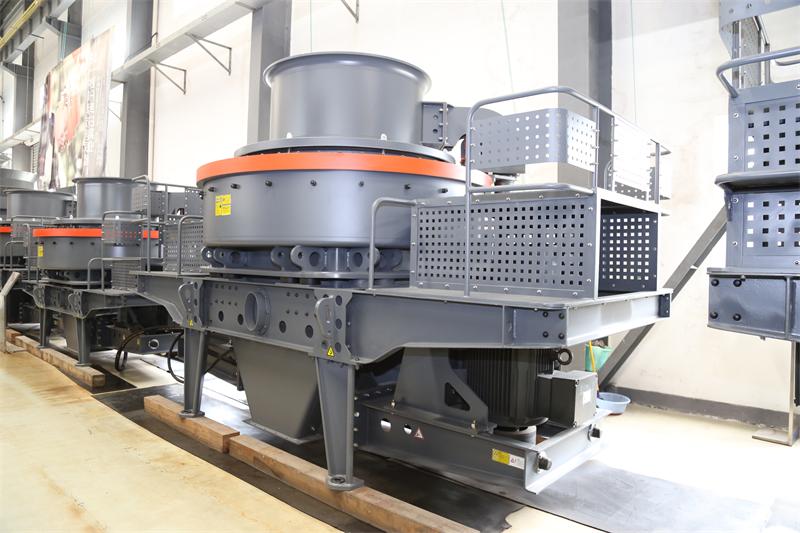
Consider a typical highway pavement project requiring stable, spec-compliant manufactured sand. The plant processes hard stone (commonly granite or basalt) and targets consistent grading to reduce asphalt variability and improve compaction. In such projects, the value of particle uniformity is practical and financial: fewer rejected batches, fewer on-site adjustments, and a smoother paving rhythm.
After switching to a digitally manufactured VSI sand making machine and standardizing maintenance procedures, many contractors report: 15–25% reduction in oversize return, 8–15% reduction in dust/fines reprocessing, and up to 30% improvement in stable hourly output during continuous paving supply windows. Just as important, the gradation curve remains closer to target across long shifts, which helps downstream mixing plants maintain consistent binder demand and moisture correction.
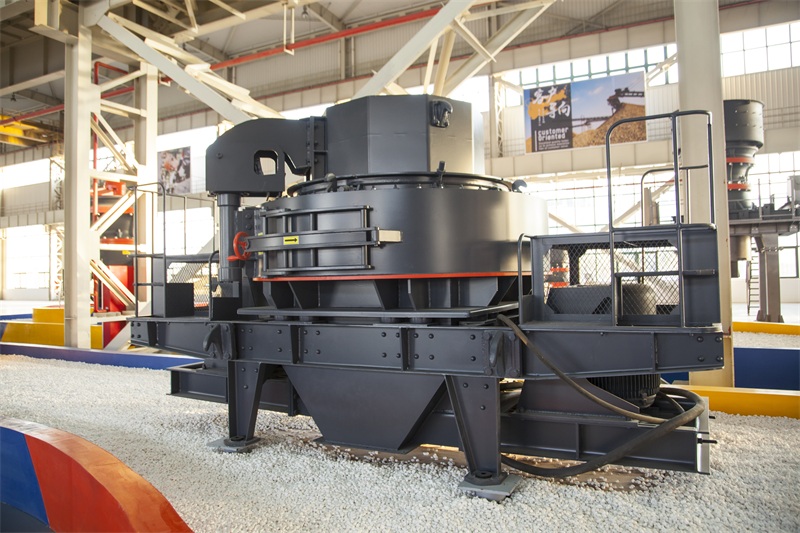
Uniformity is not a “nice-to-have.” In B2B aggregate supply, it’s a competitive lever. When a VSI crusher is manufactured with full-process digital control, the plant can convert that precision into measurable business outcomes:
With more consistent impact behavior, many lines achieve 5–10% lower fines content (material < 0.075 mm), reducing dust handling and improving product value.
Better balance and fit reduce abnormal vibration events. Plants often see 10–20% fewer unscheduled stoppages linked to mechanical instability, protecting delivery commitments.
When the machine output is consistent, the lab workload drops. Fewer corrective actions are needed, and the plant can run closer to target grading with less “guesswork.”
For contractors, consistency reduces risk. Delivering stable gradation supports repeat orders and long-term supply contracts—an operational win that becomes a commercial advantage.
This is where the marketing phrase becomes operational truth: “Precision Sand Making, New Experience” is not about decoration—it’s about repeatable manufacturing accuracy turning into repeatable sand quality, creating higher value for customers across roads, buildings, and infrastructure projects.
Buyers in the consideration stage often compare power, capacity, and wear costs—but the more decisive questions are about manufacturing and repeatability. A practical evaluation checklist includes:
In your current sand production line, is the bigger challenge gradation fluctuation, excess fines, or unstable output during long shifts? Which one would you most want a VSI upgrade to solve?




.jpg?x-oss-process=image/resize,m_fill,h_600,w_600/format,webp)

.jpg?x-oss-process=image/resize,m_fill,h_600,w_600/format,webp)
.jpg?x-oss-process=image/resize,m_fill,h_600,w_600/format,webp)





.jpg?x-oss-process=image/resize,m_fill,h_600,w_600/format,webp)


 Facebook