


1) Unstable feeding under variable material
Moist clay, mixed-size stone, or fine-heavy blends can cause flow inconsistency, impacting crusher chamber stability and causing output swings.

For crushing, screening, and conveying lines, the vibrating feeder is not a “supporting” machine—it is the production rhythm setter. When feed becomes unstable, every downstream stage pays the price: fluctuating crusher load, inconsistent product size, unplanned stops, and higher wear. That is why more plants are shifting from conventional inertia vibrating feeders (such as GZG and GZD) to the SP Series vibrating feeder developed by Zhengzhou Kuangmeng Machinery Co., Ltd.
This article compares SP vs. traditional GZG/GZD from a decision-maker perspective—capacity stability, adaptability to different materials, maintenance workload, and overall cost-efficiency—so procurement teams can make a confident upgrade choice.
In many quarries, mining operations, and aggregate plants, older feeder designs tend to deliver acceptable performance only under “ideal” conditions. Once material changes—or the line is pushed toward higher throughput—typical pain points become visible:
Moist clay, mixed-size stone, or fine-heavy blends can cause flow inconsistency, impacting crusher chamber stability and causing output swings.
Wear on springs, fasteners, and drive components often increases when the feeder runs near its limit, raising downtime and spare-part consumption.
Even a 3–8% throughput loss (common when feeding is uneven) can translate into thousands of tons annually for medium-sized lines.
Limited layout flexibility can complicate retrofits, especially when upgrading an existing station without stopping production for long.
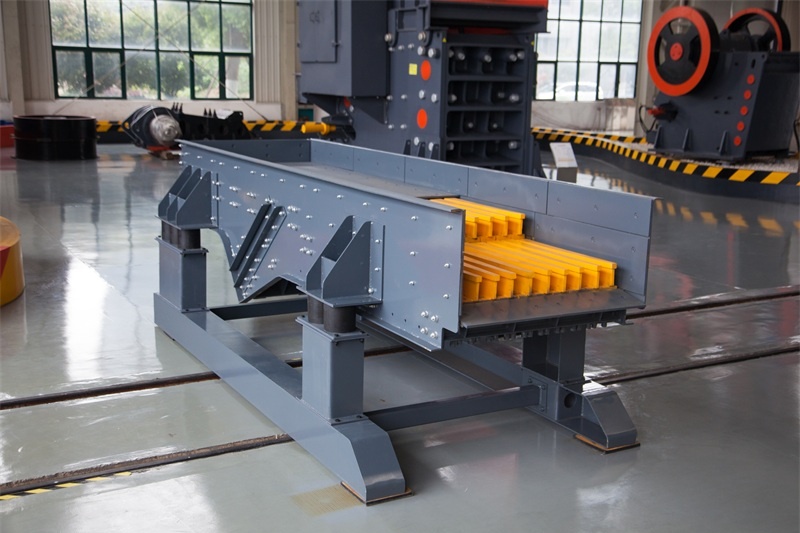
SP Series is designed as an upgrade path for operations that need more stable feeding and lower maintenance burden without overcomplicating the system. In practical terms, the improvements are not “nice to have”; they are directly linked to OEE (overall equipment effectiveness).
SP Series is built for common bulk materials in mining and aggregates—such as granite, basalt, limestone, iron ore, river stone, and mixed-size quarry runs—while maintaining consistent flow even when fines content changes. In many lines, improving feed consistency can reduce crusher current fluctuation by 10–20% (reference range from field tuning of feeder + crusher matching).
Traditional units may have adequate nominal capacity on paper but lose effective throughput when load conditions vary. SP Series emphasizes usable, stable capacity. For many mid-sized plants, a practical improvement of 5–15% in stable feed rate is a realistic target after replacement and commissioning (depending on hopper design, gate opening, and downstream equipment).
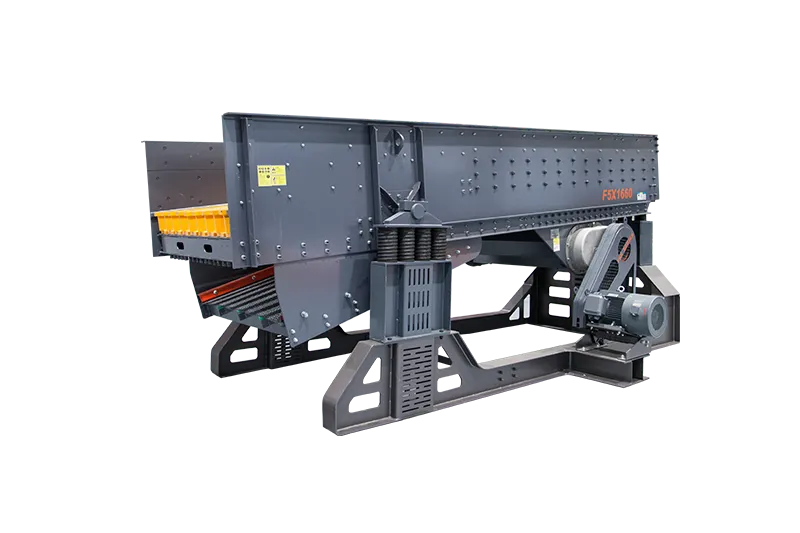
The dual vibration motor approach provides strong excitation force and easier control for continuous feeding. In practice, it supports smoother starts, fewer sudden load spikes, and more consistent material bed thickness. Many operations also report reduced “operator intervention” because the feeder is less sensitive to day-to-day material variation.
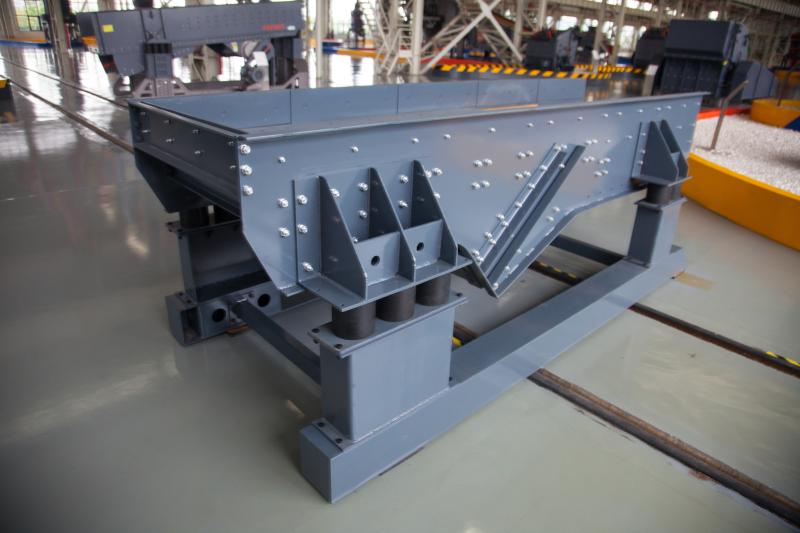
SP Series is designed to work with multiple installation methods, improving compatibility with existing steel structures and foundations. This is especially valuable when upgrading older stations: shorter mechanical modification windows often mean less production loss.
The table below summarizes common procurement criteria. Exact performance depends on model selection, material density, particle size distribution, and hopper design, but these benchmarks reflect typical differences observed in aggregate/mining applications.
| Criteria | SP Series Vibrating Feeder | Traditional GZG Feeder | Traditional GZD Feeder |
|---|---|---|---|
| Feed stability | High stability under variable load; better line rhythm | Moderate; may fluctuate with fines/moisture changes | Moderate; sensitive when operating near capacity |
| Effective throughput (field) | Often +5–15% improvement after optimization | Baseline; “rated” capacity not always achieved continuously | Baseline; output swings can reduce net tonnage |
| Maintenance workload | Lower; simplified drive concept and easier routine checks | Medium to high; more frequent adjustments/inspections | Medium to high; wear and fastener checks common |
| Downtime risk | Lower; more consistent operation reduces unplanned stops | Medium; risk increases with tougher materials | Medium; can be impacted by installation constraints |
| Energy & system efficiency | Better overall line efficiency via smoother feeding (often 2–6% energy benefit at line level) | Baseline; efficiency depends heavily on tuning | Baseline; output instability increases energy per ton |
| Retrofit friendliness | High; flexible installation supports upgrade projects | Moderate; layout and structure may require more changes | Moderate; may need longer retrofit window |
Reference note: percentage ranges are typical field observations for comparable plants after feeder replacement + commissioning and are provided for evaluation purposes.
A feeder upgrade succeeds when selection is based on material reality, not just catalog figures. Procurement and technical teams can reduce selection risk by validating these inputs:
Decision-stage buyers usually focus on purchase cost, but the larger lever is cost per ton. When feeding becomes smoother, plants typically gain value in three areas:
A stable +5–15% throughput improvement can translate into higher monthly output without expanding the entire line.
Fewer emergency stops often mean fewer lost shifts, fewer overtime hours, and more predictable delivery schedules for customers.
Reduced routine intervention can free technicians to focus on preventive work across the line, improving long-term reliability.
Ask for recommended operating range, not only maximum rated tons/hour, based on your material and hopper conditions.
Confirm inspection points, typical service intervals, and whether components are easy to access in your installation space.
Validate mounting interface, chute alignment, and whether flexible installation options fit your existing foundation/structure.
A high-efficiency feeder shows its value after tuning with the crusher and screening line, not just after delivery.
Share your material type, max lump size, target capacity, and installation constraints. Our team will propose an SP Series vibrating feeder configuration and matching suggestions to help you stabilize throughput and reduce downtime risk.
Request an SP Series Vibrating Feeder Selection & Upgrade PlanRecommended to include: material density (t/m³), moisture %, fines %, hopper opening size, and current feeder model (GZG/GZD).




.jpg?x-oss-process=image/resize,m_fill,h_600,w_600/format,webp)
.jpg?x-oss-process=image/resize,m_fill,h_600,w_600/format,webp)
.jpg?x-oss-process=image/resize,m_fill,h_600,w_600/format,webp)

.jpg?x-oss-process=image/resize,m_fill,h_600,w_600/format,webp)
.jpg?x-oss-process=image/resize,m_fill,h_600,w_600/format,webp)

.jpg?x-oss-process=image/resize,m_fill,h_600,w_600/format,webp)







.jpg?x-oss-process=image/resize,m_fill,h_600,w_600/format,webp)


 Facebook