
In today's construction, infrastructure, and manufacturing industries, the demand for high-quality sand has never been higher. Construction projects require sand with precise particle size distribution and minimal impurities to ensure structural integrity, while specialized applications like glass manufacturing and hydraulic fracturing demand even stricter purity standards.
According to industry research, the global construction sand market is projected to reach $198.3 billion by 2027, growing at a CAGR of 5.2% from 2020 to 2027. This growth brings increased pressure on sand producers to deliver consistent, high-purity products while maintaining operational efficiency.
"Impure sand containing more than 3% clay content can reduce concrete strength by up to 20%, significantly compromising structural safety and durability." — International Association of Concrete Technology, 2022
Traditional sand washing methods often struggle to meet modern purity requirements. Common challenges include:
These limitations not only affect product quality but also increase operational costs and environmental impact. For sand producers, finding an efficient washing solution that balances purity, productivity, and sustainability has become a critical business priority.

The LSX Series Spiral Sand Washer introduces a paradigm shift in sand cleaning technology through its innovative Long Spiral Stage Washing Method. This advanced approach redefines sand washing efficiency by optimizing the critical factors that determine cleaning effectiveness: contact time, water distribution, and particle movement.
Unlike conventional washers that rely on simple agitation, the LSX Series employs a multi-stage cleaning process:

The effectiveness of the LSX Series Spiral Sand Washer is validated by independent testing and real-world applications across diverse operating conditions:
| Performance Metric | Traditional Washers | LSX Series Washer | Improvement |
|---|---|---|---|
| Clay Removal Efficiency | 65-75% | 95-98% | +27% |
| Water Consumption | 3-5 m³/ton | 1.5-2.5 m³/ton | -40% |
| Energy Efficiency | 0.8-1.2 kWh/ton | 0.5-0.7 kWh/ton | -38% |
| Fine Material Recovery | 60-70% | 85-90% | +25% |
A major aggregates producer in Germany implemented the LSX Series Spiral Sand Washer at their Rhineland facility, processing 150 tons/hour of sand with high clay content (originally 8-10%). The results after three months of operation were striking:
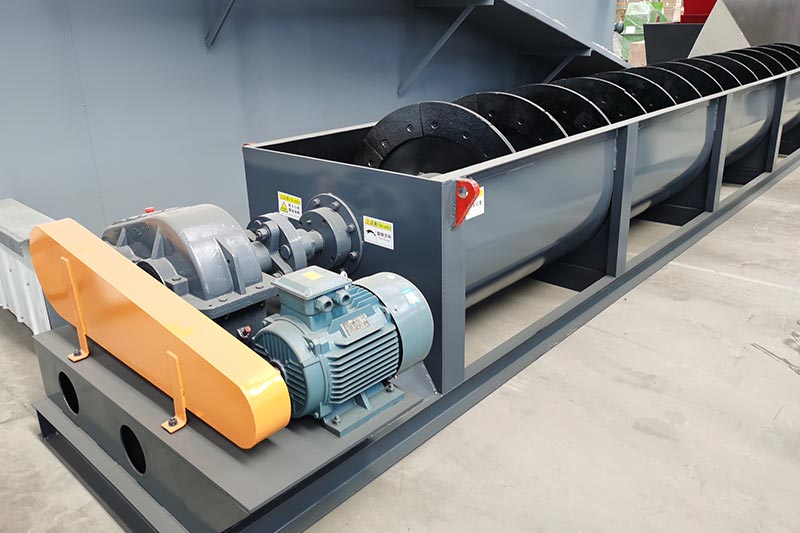
Every sand washing operation faces unique challenges based on material characteristics, production goals, and environmental constraints. The LSX Series Spiral Sand Washer offers versatile solutions to common industry pain points:
Our multi-stage washing process ensures uniform cleaning across all particle sizes, delivering consistent product quality batch after batch.
With reduced water and energy consumption, LSX Series washers typically deliver ROI within 8-14 months of installation.
Lower water usage and efficient solids capture help meet stringent environmental regulations and sustainability goals.
Take our quick assessment to identify potential improvements in your sand washing operation:
If you answered "yes" to any of these questions, the LSX Series Spiral Sand Washer could transform your operations.
Discover how the LSX Series Spiral Sand Washer can提升 your product quality, reduce operational costs, and improve sustainability.
Request a Customized Efficiency AnalysisOur sand washing specialists will evaluate your specific needs and provide a personalized solution recommendation at no cost or obligation.
As sand quality requirements continue to rise across industries, the difference between market leaders and competitors increasingly lies in production technology. The LSX Series Spiral Sand Washer represents not just an equipment upgrade, but a strategic investment in product quality, operational efficiency, and environmental responsibility.
Whether you're producing construction aggregates, specialized industrial sands, or mining materials, the Long Spiral Stage Washing Method offers a proven path to higher purity, lower costs, and greater market competitiveness. The question isn't whether you can afford to upgrade your washing technology, but whether you can afford not to.





.jpg?x-oss-process=image/resize,m_fill,h_600,w_600/format,webp)








 Facebook