
In today's competitive aggregates and mining industries, operational efficiency directly translates to bottom-line success. Yet many production facilities continue to struggle with material handling inefficiencies that create bottlenecks throughout their crushing processes. A recent industry survey revealed that 32% of aggregate producers identify material feeding inconsistencies as their primary production constraint, leading to an average of 15-20% lost production capacity.
Traditional feeding systems often fail to maintain optimal material flow to crushers, resulting in uneven loading, frequent jams, and excessive wear on downstream equipment. These issues not only reduce throughput but also increase maintenance costs and unplanned downtime. The consequences are significant: a mid-sized quarry operating with inefficient feeding systems can lose up to $120,000 annually in potential revenue due to these preventable issues.
Industry Challenge:
"Our primary jaw crusher was operating at only 75% capacity due to inconsistent feed rates from our old apron feeder. We experienced frequent blockages and had to assign two operators just to monitor and adjust the feeding process." — Production Manager, Midwestern U.S. Quarry
GF vibrating feeders represent a significant advancement in material handling technology, specifically engineered to address the core challenges of primary feeding applications. At the heart of this innovation is a robust design that combines high-capacity material handling with exceptional reliability.
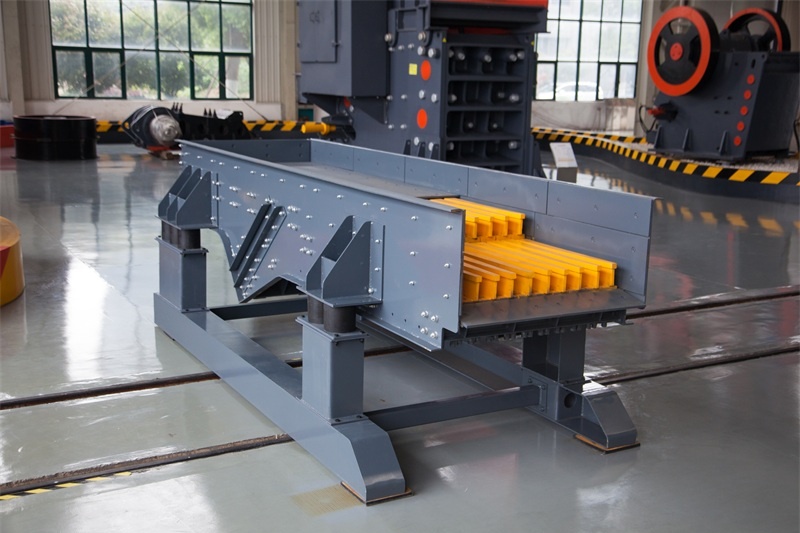
Key performance metrics distinguish GF feeders from conventional alternatives:
| Performance Parameter | GF Vibrating Feeder | Conventional Apron Feeder |
|---|---|---|
| Maximum Feed Size | 1200 mm | 800 mm |
| Capacity Range | 50-1200 t/h | 30-800 t/h |
| Energy Consumption | 3-15 kW | 11-22 kW |
| Maintenance Interval | 6,000+ hours | 2,000-3,000 hours |
The secret to the GF feeder's exceptional performance lies in its precision-engineered vibration system. Unlike mechanical feeders that rely on moving parts and complex drive mechanisms, GF feeders utilize advanced vibration motor technology that delivers controlled, linear motion to move material efficiently.
This design offers several critical advantages:
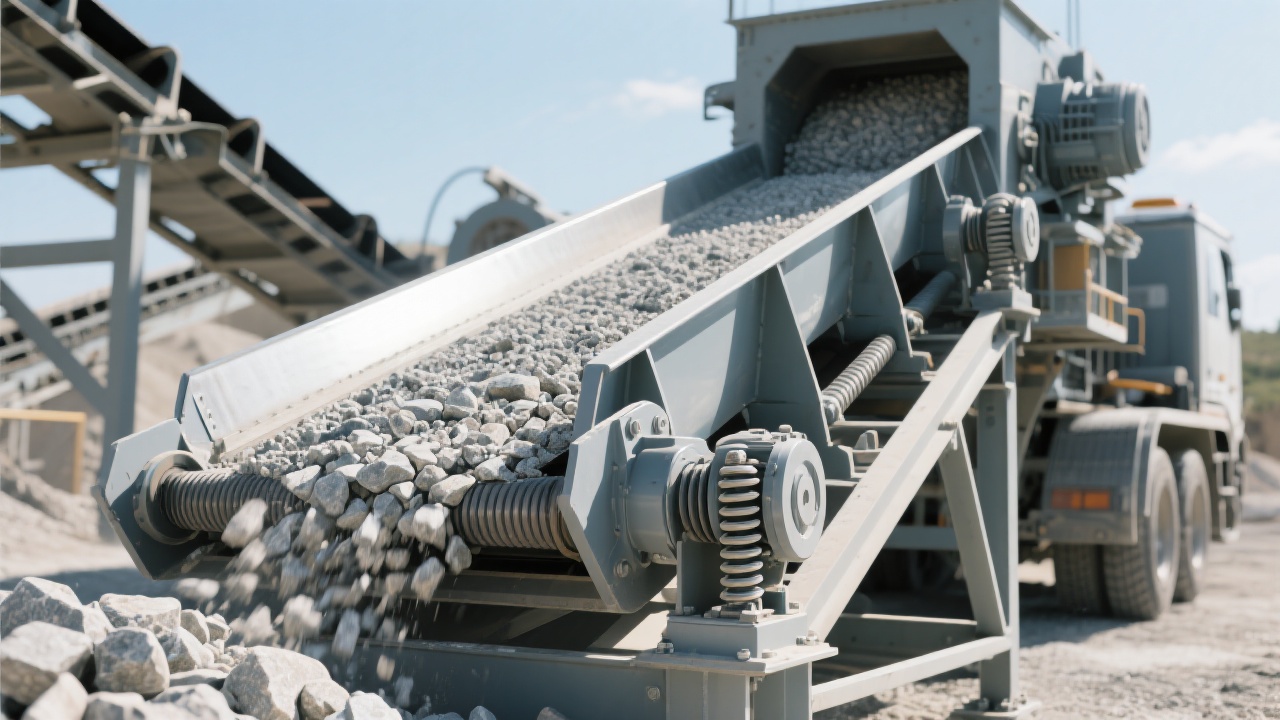
The GF feeder's dual-vibration motor design creates linear motion that propels material forward in a uniform wave pattern. This action not only moves material more efficiently but also helps to deaerate and consolidate the material bed, preventing bridging and ensuring consistent feed to the crusher. Field tests have demonstrated that this technology can increase crusher throughput by 18-22% compared to traditional feeding methods.
One of the most compelling aspects of GF vibrating feeders is their exceptional versatility. These robust machines excel in various operational scenarios, from mobile crushing plants to fixed production lines, handling everything from limestone and granite to recycled concrete and ore.
Typical applications include:
Compact design with integrated vibration isolation ensures stable operation on mobile platforms, even in rough terrain conditions.
High-capacity models handle large material volumes while maintaining precise feed control for optimized crushing efficiency.
Customizable inlet/outlet configurations ensure seamless integration with existing storage systems, preventing material rat-holing and bridging.
The true measure of any equipment's value lies in its real-world performance. GF vibrating feeders have consistently delivered measurable improvements for operations across North America, Europe, and Asia. Here are just two examples of how these feeders have transformed production efficiency:
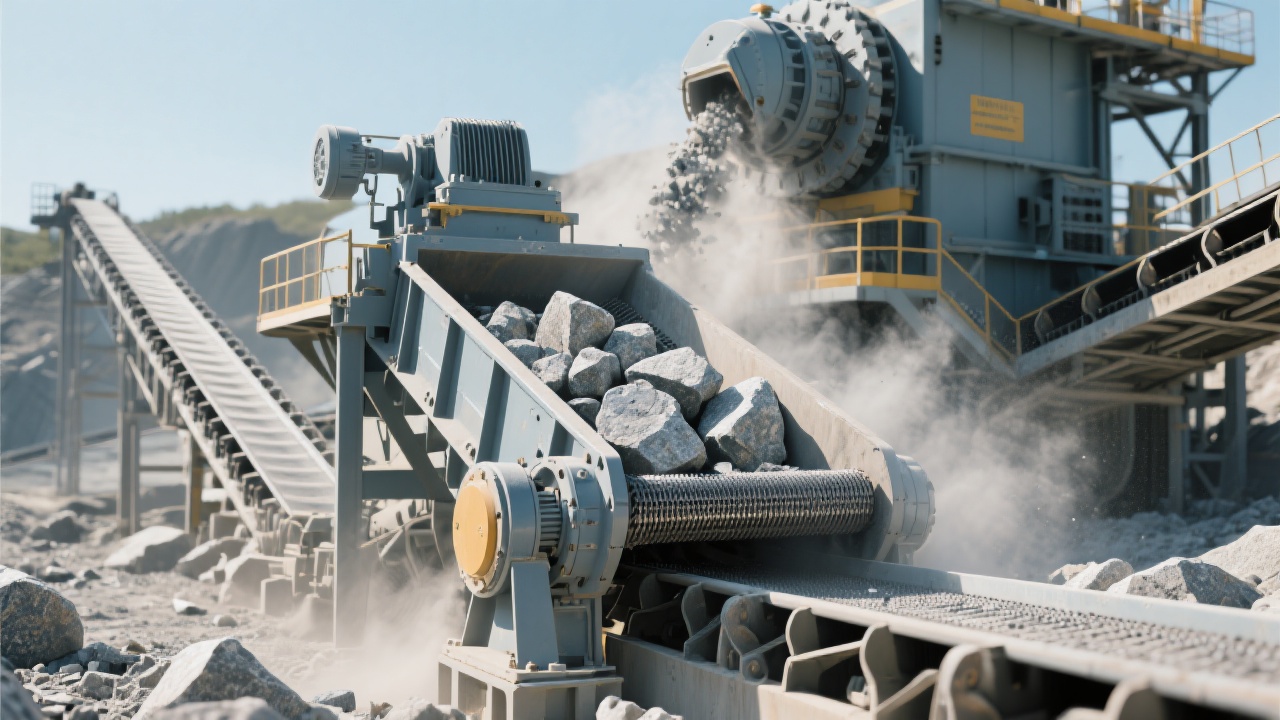
A major iron ore producer was struggling with frequent blockages and uneven feeding to their primary jaw crusher, resulting in production losses of approximately 1,200 tons per day. After installing a GF-800 vibrating feeder, they experienced:
A mid-sized quarry producing construction aggregates was experiencing significant wear issues with their existing apron feeder, requiring monthly replacement of wear parts. After switching to a GF-650 vibrating feeder:
Discover how GF vibrating feeders can eliminate bottlenecks, reduce maintenance costs, and boost your production capacity. Our team of application engineers will conduct a free assessment of your current operation and provide a customized solution tailored to your specific needs.
Schedule Your Free Feeding Efficiency AnalysisEvery production facility faces unique challenges, but inefficient material feeding doesn't have to be one of them. With proven technology, measurable results, and versatile applications, GF vibrating feeders represent a smart investment in your operation's future. The difference in performance is clear—and so is the impact on your bottom line.









.jpg?x-oss-process=image/resize,m_fill,h_600,w_600/format,webp)





.jpg?x-oss-process=image/resize,m_fill,h_600,w_600/format,webp)
.jpg?x-oss-process=image/resize,m_fill,h_600,w_600/format,webp)


 Facebook